Gordon Butcher
Gordon Butcher
Born in Halifax, Nova Scotia, Gordon Butcher experienced one of the defining disasters of early twentieth-century Canada when his family relocated to Boston after the Halifax Explosion of 1917. He began his career designing retail displays for Sears, creating installations in stores throughout New England. A transfer to help open a Sears store in Glendale, California, introduced him to members of the motion picture industry and ultimately led him into Hollywood scenic art.
Early Career
Gordon Butcher later moved to Culver City to work at MGM Studios. While Scenic Art Supervisor George Gibson served during World War II, scenic artist Les Sanford hired Butcher as an assistant scenic artist—his first studio position. At MGM, he worked alongside many of Hollywood’s finest scenic artists. He later recalled being well paid and belonging to an “elite group” associated with the artistic standards established by art directors Cedric Gibbons and Peter Ellenshaw.
Hollywood Scenic Artist
In the early 1950s, Butcher left MGM to join John H. Coakley at 20th Century Fox, where he became a lead scenic artist. When Fox closed its scenic art department, he continued painting for television productions at NBC. Later, he returned to motion picture scenic art after Coakley established J.C. Backings. Butcher remained with the company through Coakley’s leadership and continued painting after Gary Coakley assumed responsibility for the studio.
Karen Maness documents Butcher’s work on The Barbarian and the Geisha (1958), Something’s Got to Give (1962), Land of the Giants (1967), Hello, Dolly! (1969), and San Francisco (1986). These productions reflect a career that spanned feature films, television, and the changing landscape of Hollywood scenic painting.
Beyond Motion Pictures
Throughout his career, Gordon Butcher frequently worked with scenic artist Duncan A. Spencer under the DAS Scenic label. Together, they completed the “First Vision” display at the Mormon Visitors’ Center in Salt Lake City and painted several dioramas for the Natural History Museum of Los Angeles County.
His career also reflects the collaborative nature of Hollywood scenic art. Working with artists including John H. Coakley and Duncan A. Spencer, Butcher applied the same scenic painting techniques to feature films, television productions, museum exhibitions, and large-scale public commissions.
Legacy
Gordon Butcher’s career connected several generations of Hollywood scenic artists. From MGM and 20th Century Fox to NBC and J.C. Backings, he remained part of the evolving tradition of scenic painting as the industry expanded beyond the studio system. His handwritten journal, preserved in the MacPhee Collection, documents both his career and the collaborative world of Hollywood scenic art.
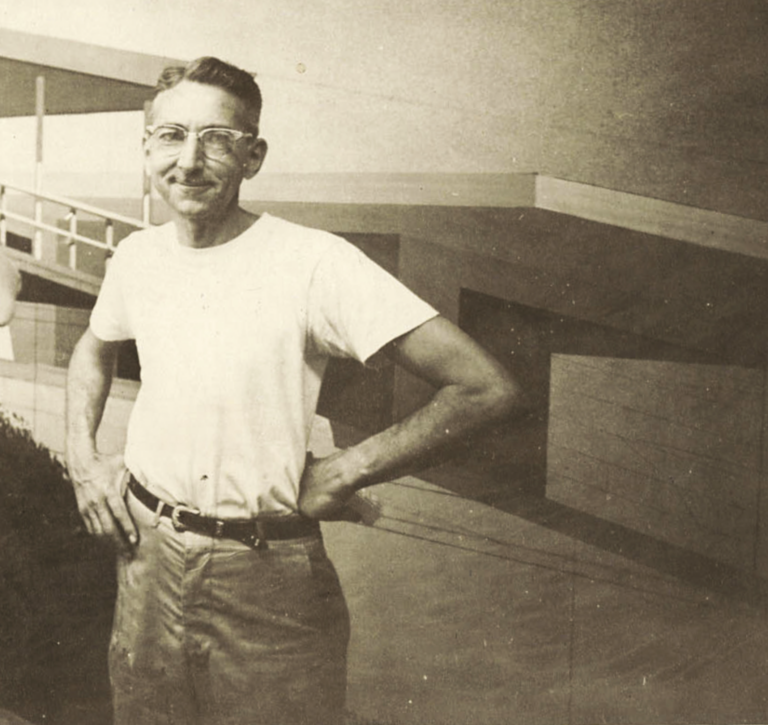
Gordon Butcher at J.C. Backings in the 20th Century Fox Scenic Studio painting for Marilyn Monroe's final film, Something's Got to Give (1962)
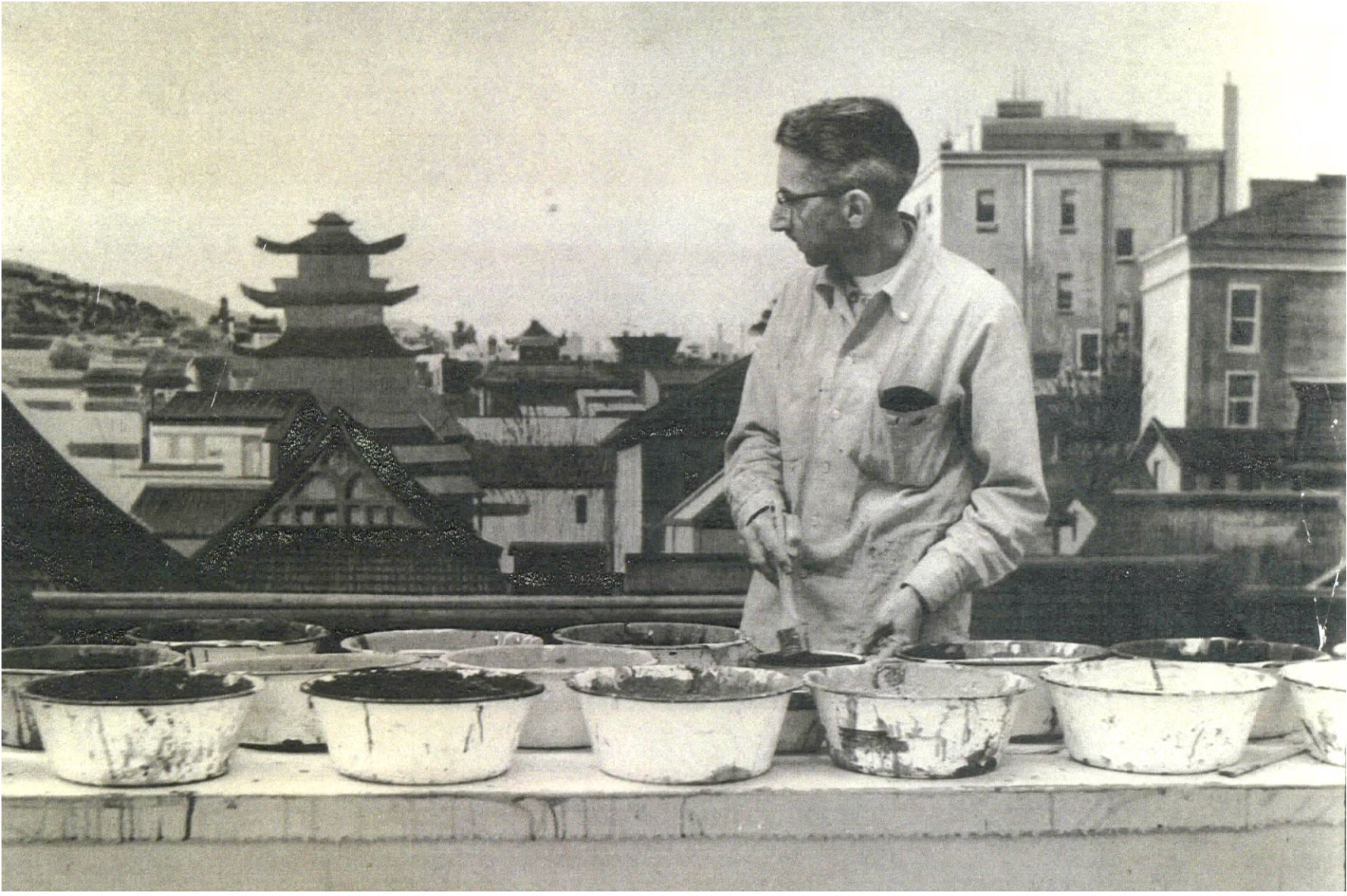
Gordon Butcher, lead artist at 20th Century Fox Scenic Art Department painting backdrop for The Barbarian and the Geisha (1958)
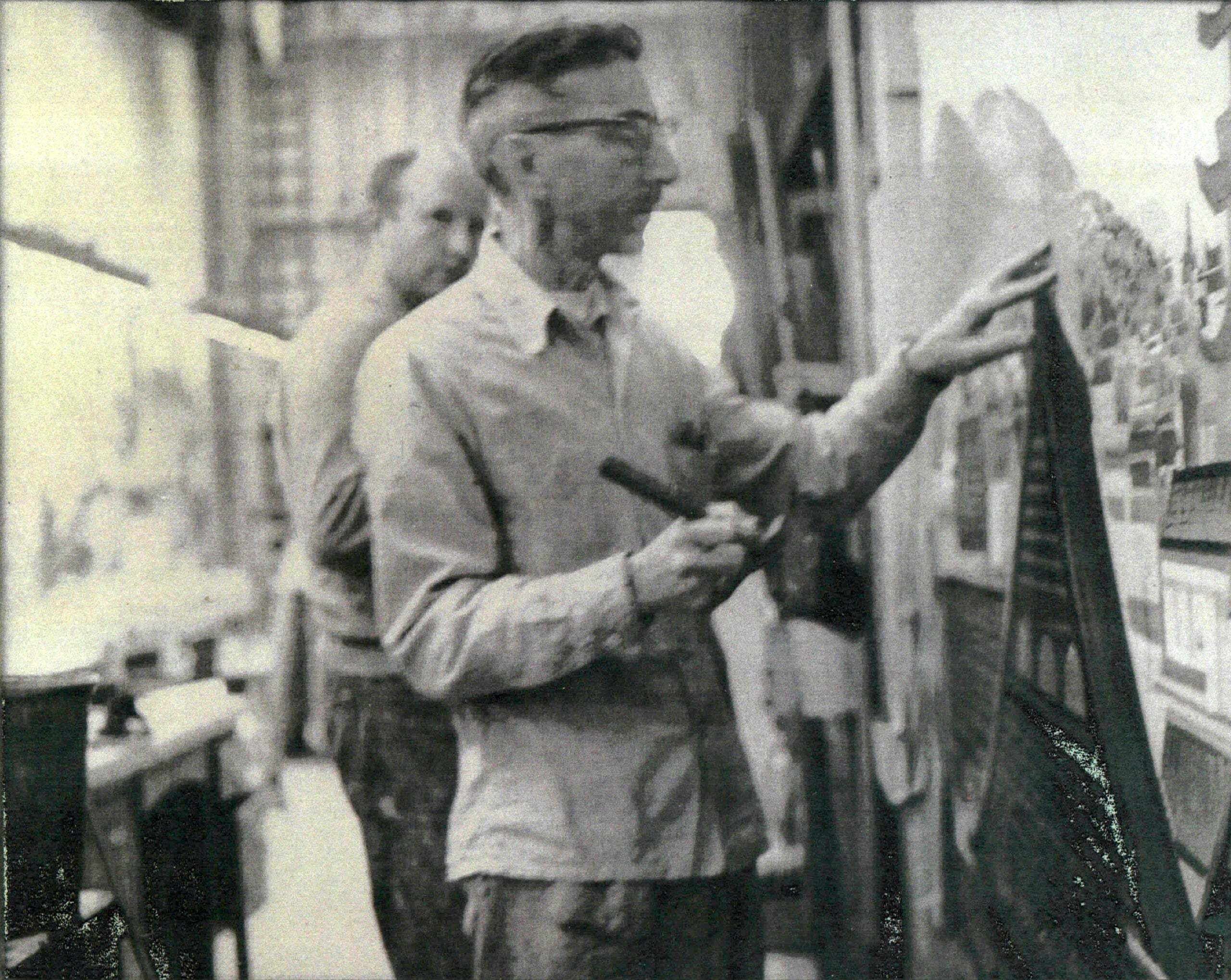
Scenic artists Albert Londraville and Gordon Butcher work on a backdrop in 1958. This historic photograph documents the collaborative painting process used in Hollywood scenic art studios and was preserved through research conducted for the Hollywood Backdrop Collection.
Andy MacPhee Collection