Art Rider
(1886 – 1975)Art Rider
Art Rider (Arthur Grover Rider) was born in Chicago in 1886 and became one of Hollywood’s most accomplished scenic artists, master colorists, and fine painters. He received his early formal training at the Chicago Academy of Fine Arts and completed a scenic art apprenticeship at Sosman & Landis, where he adopted the color theory practices of artist Fred Scott. As a student, Rider painted scenery for the Chicago Lyric Opera before traveling to Europe to continue his artistic education.
Early Life and Artistic Training
Born in Chicago, Art Rider received his early formal training at the Chicago Academy of Fine Arts and a scenic art apprenticeship at Sosman & Landis, adopting the color theory practices of artist Fred Scott. As a student, he painted as a scenic artist for the Chicago Lyric Opera before traveling to Europe to continue his studies. In London, he painted for the London Opera at Covent Garden. Rider was an established en plein air oil painter and painting companion to Spanish artist Joaquín Sorolla, painting famed Spanish sailboat scenes at each other’s side.
Additional published research documents that Rider continued his studies at the Académie Colarossi and Académie de la Grande Chaumière in Paris. He later spent nine summers painting in Valencia, Spain, alongside Joaquín Sorolla. His paintings were exhibited in Spain, and after Sorolla’s death in 1923, Rider remained closely connected to the artist’s circle before eventually settling in Southern California in 1931.
Art Rider’s Hollywood Career
Later settling in Southern California in 1931, Rider contributed vitally to hundreds of films for R. L. Grosh and Sons, MGM, 20th Century Fox, and, later, J.C. Backings as a lead scenic artist and master colorist. His painting credits include National Velvet (1944), Cleopatra (1963), and Hello, Dolly! (1969).
Published sources also identify Rider as one of the leading scenic artists at MGM and 20th Century Fox. He worked for both studios for more than three decades. Additional film records, including IMDb, credit Rider with scenic-art work on productions such as The Wizard of Oz (1939), where he is listed as an uncredited scenic artist, reflecting the often-uncredited collaborative nature of Hollywood scenic art during the studio era.
Fine Art Legacy
Throughout his career, Art Rider maintained an active practice as a fine artist. His coastal landscapes, Spanish scenes, and California paintings have been exhibited by major museums and continue to appear in significant auctions. Bonhams notes that his years painting alongside Joaquín Sorolla profoundly influenced his handling of Mediterranean light, while his works remain sought after by collectors of California Impressionism and American art.
Artfix Daily, Artwire. 2011. “Painting by noted Hollywood Scenic Artist leads summer auction at Bonhams & Butterfields,” July 19., Isackes, Richard M., Maness, Karen L. 2016. The Art of the Hollywood Backdrop, ReganArts., Waszut-Barrett, Wendy. 2021. Sosman & Landis: Shaping the Landscape of American Theatre. Employee No. 45 – Arthur G. Rider, Oct 30.
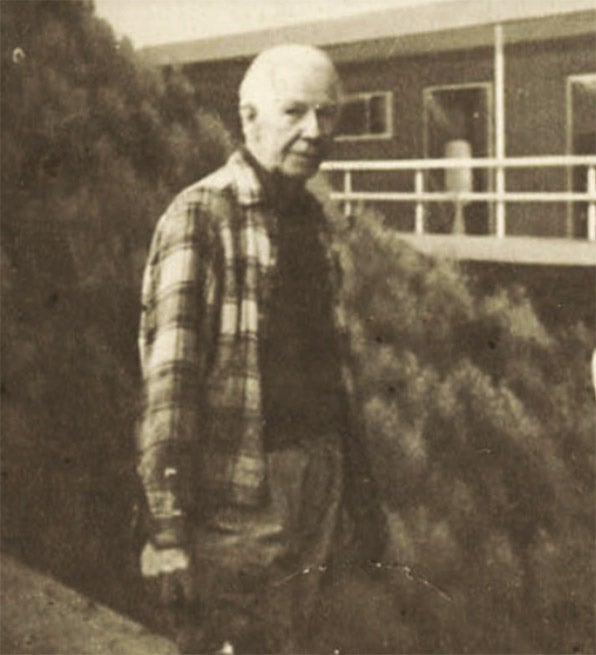
Arthur Grover Rider at J.C. Backings, 20th Century Fox scenic studio
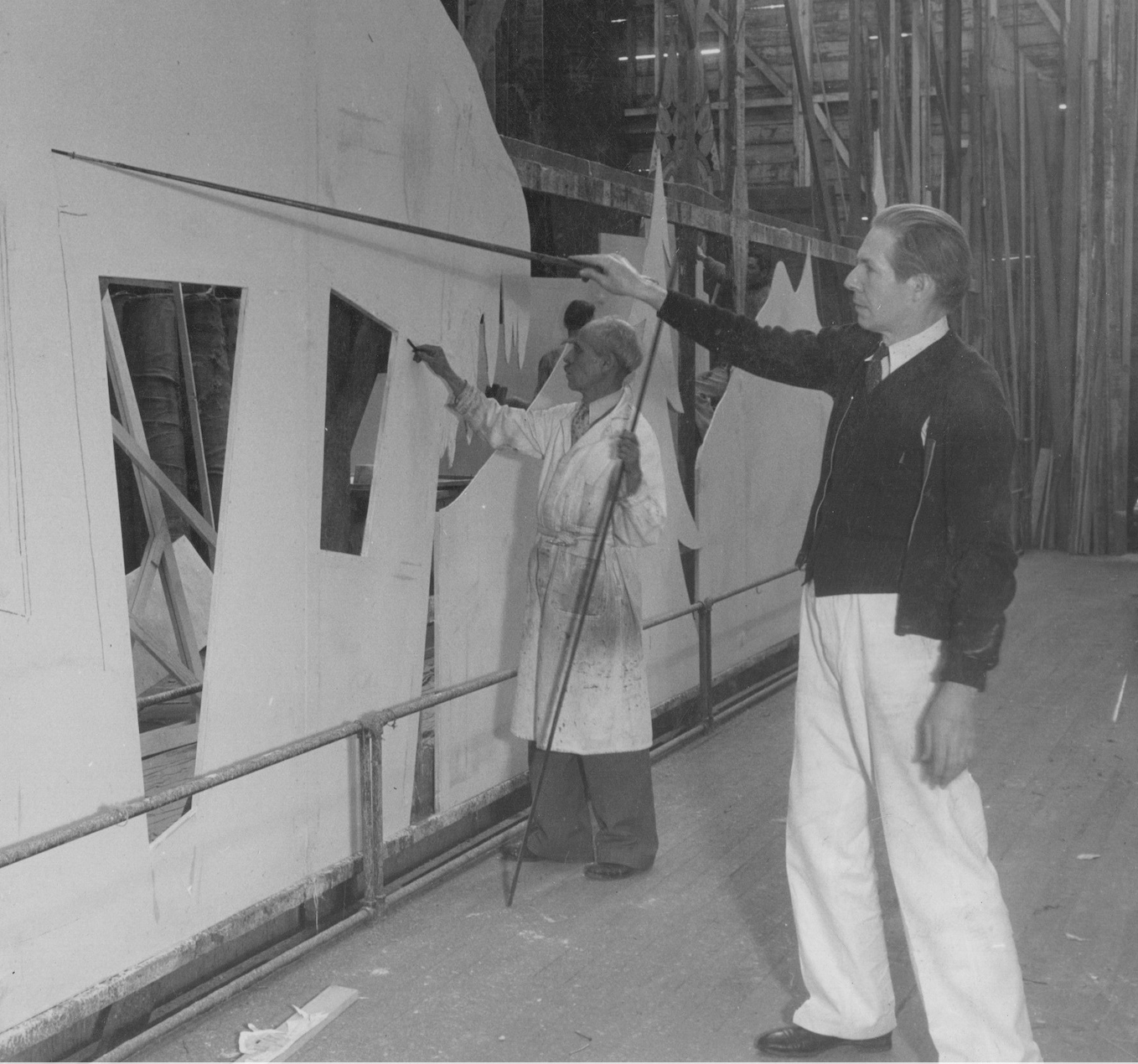
Art Rider(right), R.L. Grosh & Sons, "cartooning" on hard scenic profile unit, c 1930s
Bill Anderson Collection