Harry Tepker
(1923 – 1998)Early Career at MGM
Harry Tepker worked at MGM from 1949 to 1977. He succeeded George Gibson as Scenic Art Supervisor following Gibson’s retirement. Trained directly by Gibson, Tepker continued the scenic painting methods that helped define MGM’s visual style. Throughout his career, he also mentored assistants and younger scenic artists, passing along the techniques he had learned.
Harry Tepker’s Scenic Painting Techniques
One of Tepker’s specialties was creating the illusion of aerial perspective. He organized his paintings into three distinct color zones: foreground, middle distance, and background. He then balanced warm and cool colors within each zone to create convincing depth. As a result, Gibson’s “1-2-3” painting method became the aesthetic guide for MGM’s scenic art department. Tepker used this structured approach throughout his career and generously shared it with fellow scenic artists.
Film and Television Credits
In addition to MGM, Tepker worked for 20th Century Fox, Warner Bros., Paramount Studios, Disney Studios, and J.C. Backings Corporation. His painting credits include An American in Paris (1951), Singin’ in the Rain (1952), The Band Wagon (1953), Julius Caesar (1953), Brigadoon (1954), Oklahoma! (1955), Forbidden Planet (1956), Gigi (1958), Ben-Hur (1959), North by Northwest (1959), The Sandpiper (1965), The Shoes of the Fisherman (1968), Ice Station Zebra (1968), Earthquake (1974), The Towering Inferno (1974), The Hindenburg (1975), King Kong (1976), Logan’s Run (1976), and Winter Kills (1979). His television credits include Rawhide and Medical Center.
Legacy
Today, photographs and archival materials in the Hollywood Backdrop Collection document Harry Tepker’s career and preserve examples of the collaborative craftsmanship that defined Hollywood scenic art during the studio era.
Harry Tepker’s career reflects the collaborative nature of Hollywood scenic art during the studio era. Working across multiple studios and productions, he helped create the painted environments that transformed soundstages into believable locations. The photographs and archival materials preserved in the Hollywood Backdrop Collection document both his craftsmanship and the teamwork behind large-scale scenic painting.
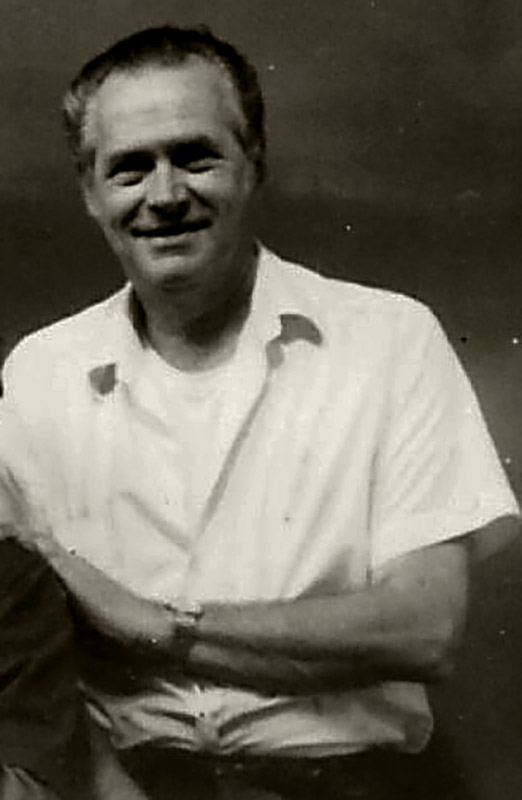
Lead Scenic Artist Harry Tepker at J.C. Backings
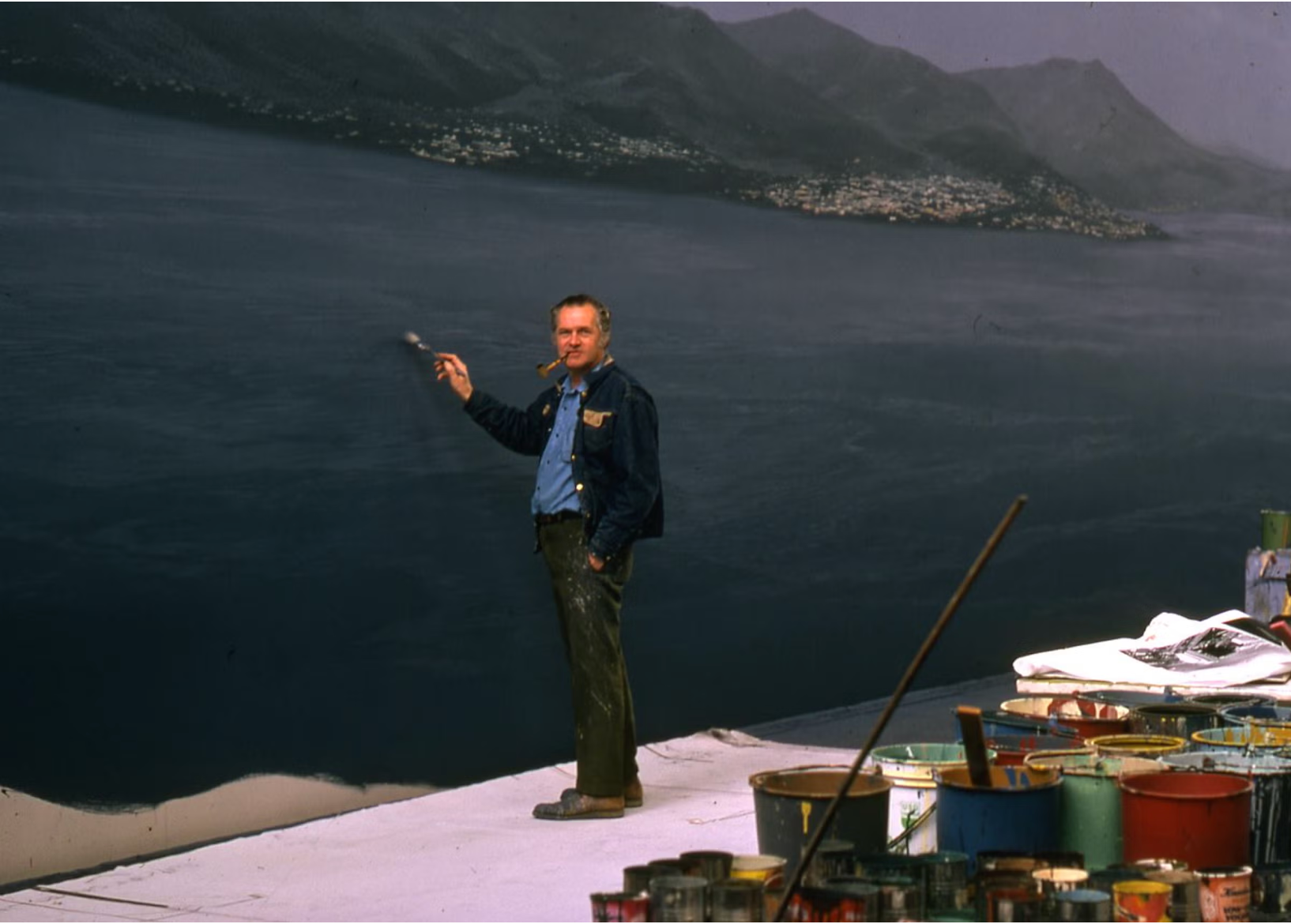
Harry Tepker at J.C. Backings
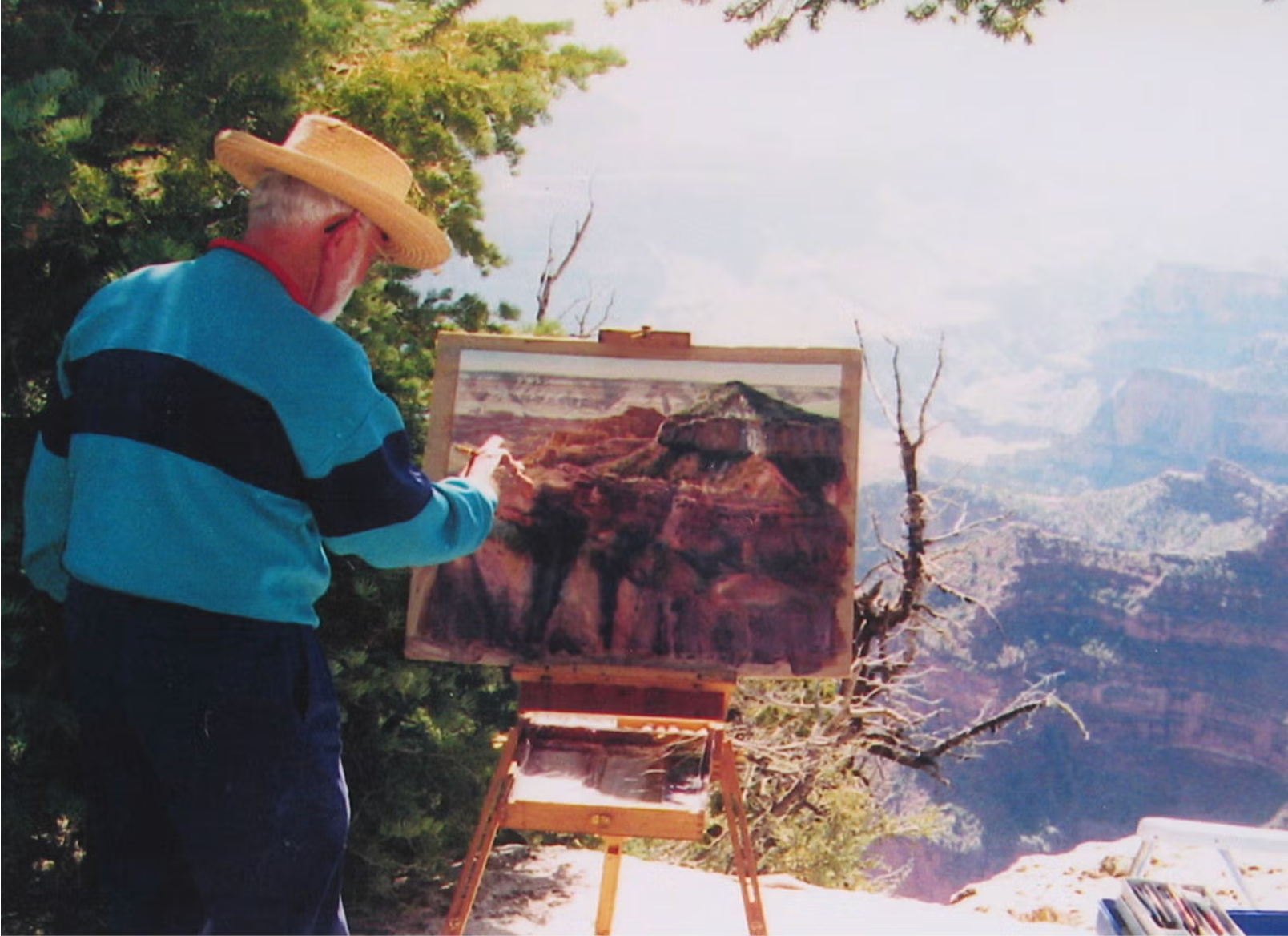
Scenic artist Harry Tepker plein air painting at the Grand Canyon. Courtesy of the Tepker Family
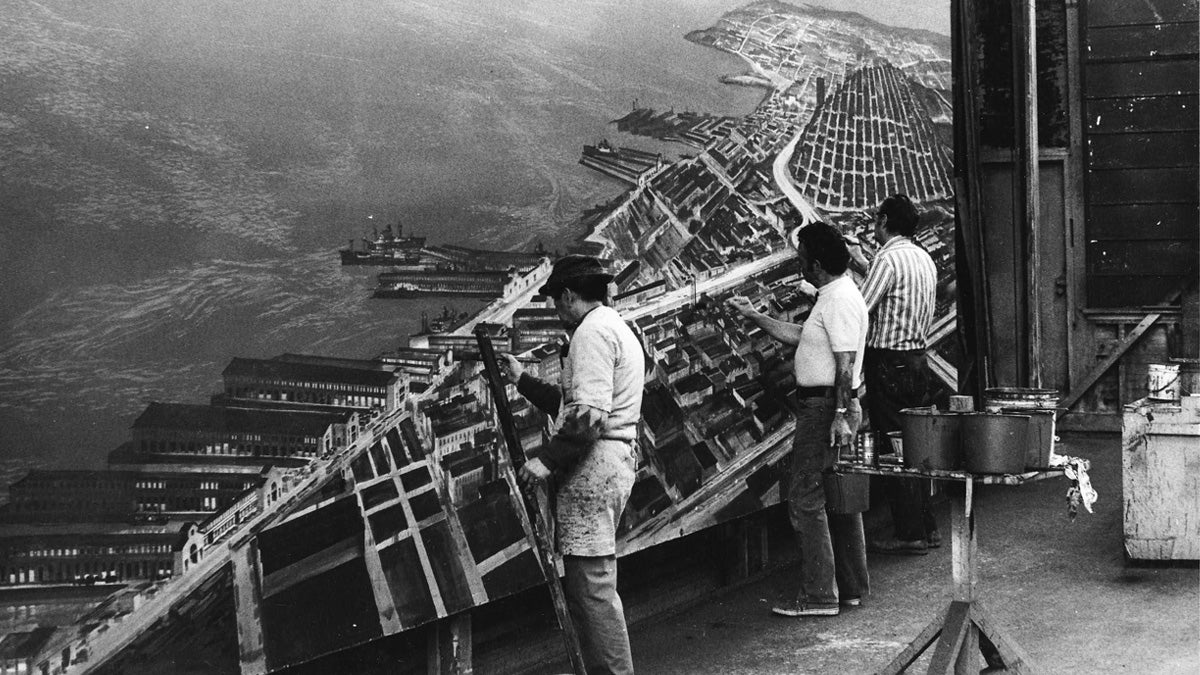
Fred Tuch, Ben Resella, and Harry Tepker painting a cityscape backdrop
Courtesy Chris Coakley Collection; Courtesy Andy MacPhee Collection