David Addison Helms
(1908 – 1981)David Addison Helms
California-born scenic artist David Addison Helms (1908–1981) spent approximately forty-five years at MGM Studios, where he worked under Scenic Art Supervisor George Gibson during Hollywood’s Golden Age. A member of the Painters and Sculptors of Los Angeles, Helms specialized in painting skies and atmospheric effects for motion pictures. Within the studio, he became known as one of MGM’s “skymen,” artists whose work created convincing horizons, clouds, and changing light long before digital visual effects.
A Career at MGM Studios
Helms spent most of his professional life in MGM’s scenic art department, where painted backdrops extended sets beyond the walls of the soundstage. His work required careful control of color, value, atmosphere, and perspective so that painted scenery blended seamlessly with live-action photography. Working alongside George Gibson and other scenic artists, Helms contributed to the collaborative craftsmanship that defined Hollywood’s studio system.
Painting Hollywood’s Classic Films
Throughout his career, Helms painted skies for many of Hollywood’s best-known productions. His work appears in The Wizard of Oz (1939), Gone with the Wind (1939), and Ben-Hur (1959). In each production, painted backdrops created expansive landscapes and dramatic skies that became part of the films’ visual identity.
After leaving MGM, Helms continued working as a scenic artist in Southern California. He later painted every sky seen in Alfred Hitchcock’s The Birds (1963). His specialized skills remained in demand as Hollywood production methods evolved. According to fellow scenic artist Wilbur Ferrell, colleagues at ABC Studios remembered Helms as one of the industry’s legendary scenic painters. They also admired his craftsmanship and his generosity toward younger artists.
Legacy
David Addison Helms devoted his career to an art form that rarely received screen credit but remained essential to motion picture production. His paintings transformed studio stages into convincing landscapes and atmospheric settings for generations of moviegoers. Today, his work stands as an example of the skill, precision, and collaboration practiced by Hollywood’s scenic artists throughout the twentieth century.
Ferrell, Wilbur. 2018, 2019, 2022, 2023 Telephone and in-person interviews with Karen L. Maness.
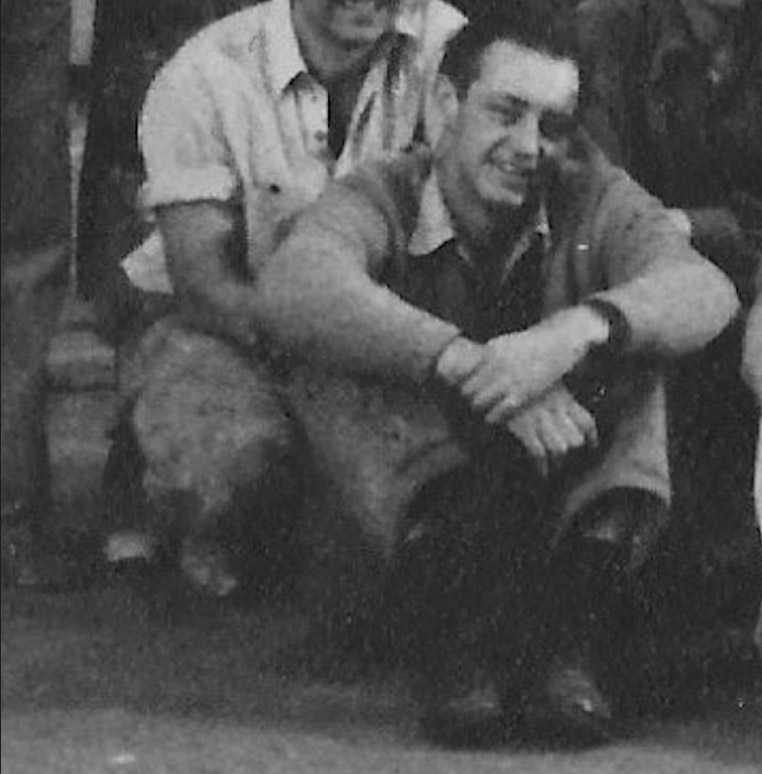
David Addison Helms 1946
Jean Gibson-Gorrindo Estate